【Relics Become Icons】 Hongwu Gold Ingot
——五千年文明看山西
——Exploring 5,000 Years of Civilization in Shanxi
如果文物界也有“硬通货”,那这枚金锭绝对是最有分量的那一个。
If there were such a thing as "hard currency" in the world of cultural relics, this gold ingot would undoubtedly be the most substantial of them all.
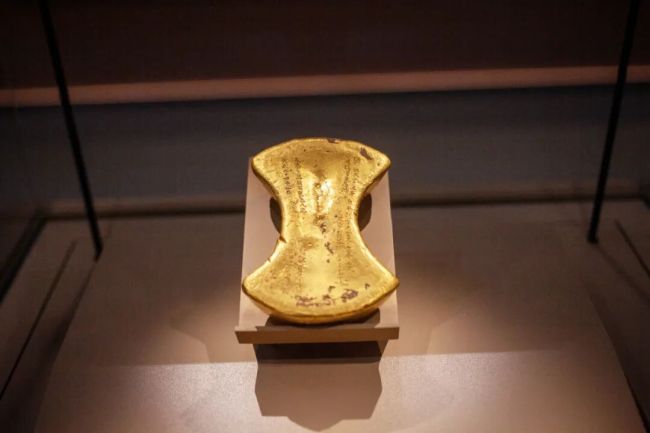
1972年,太原市南郊黄陵村明晋王墓中,一枚沉甸甸的金锭破土而出。它重达1946克——将近四斤!上面镌刻着:“潞州洪武二十三年折收秋粮赤金五十两五钱重……”的字样。这枚金锭,就是山西博物院的“洪武金锭”,现藏于四层“方圆世界”展厅。
In 1972, a heavy gold ingot was unearthed from the tomb of the Ming Prince of Jin in Huangling Village, southern suburbs of Taiyuan City. Weighing in at 1,946 grams—nearly four jin (about two kilograms)—it bears the inscription: "In the 23rd year of the Hongwu reign in Luzhou, autumn grain tax converted to fine gold, weighing fifty taels and five qian..." This gold ingot is the "Hongwu Gold Ingot" of the Shanxi Museum, now on display in the "Square World" exhibition hall on the fourth floor.
别小看这枚金锭。它可不是普通的金子,而是改写历史的“金”证。在中国黄金史上,此前从未发现过如此大体量的“大锭”。它的出土,填补了这一空白,让学者们重新认识了明代黄金的铸造与流通。
Don't underestimate this gold ingot. It's not just ordinary gold—it's a "golden" piece of evidence that rewrites history. In the history of Chinese gold, no "large ingot" of this size had ever been discovered before. Its excavation filled that gap, allowing scholars to rethink the casting and circulation of gold during the Ming dynasty.
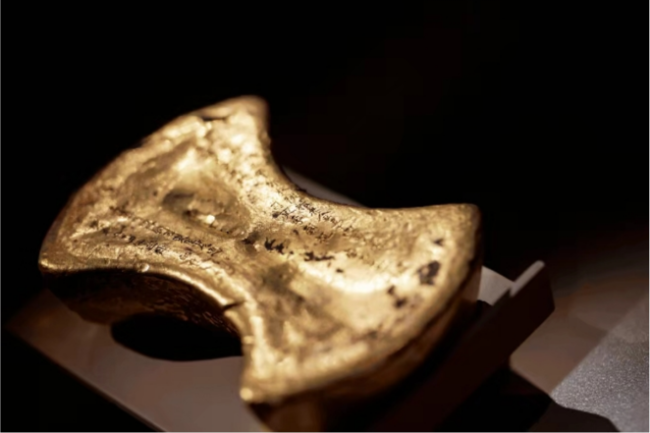
更厉害的是它的“文案”。金锭上的铭文清清楚楚地记录了明代赋税制度中的“折收”现象——田赋可以折价征收黄金。换句话说,农民交粮食可以换成交金子。这枚金锭,就是那段历史的实物“收据”,是研究明代经济与藩王财富的一手“金”证。
Even more remarkable is its "inscription." The text on the gold ingot clearly records a phenomenon in the Ming dynasty tax system known as "conversion tax"—the practice of converting agricultural tax obligations into gold payments. In other words, farmers could pay their taxes in gold instead of grain. This gold ingot is a physical "receipt" of that historical practice and a firsthand "golden" piece of evidence for studying the Ming dynasty economy and the wealth of feudal princes.
曾经的它,是见证洪武年间历史气象的“重量级”文物;现在的它,则成为观众们争相打卡的“信标”。毕竟,谁不想跟一块将近四斤的大金锭合个影呢?
Once a "heavyweight" relic bearing witness to the historical grandeur of the Hongwu era, it has now become a "check-in beacon" for museum visitors. After all, who wouldn't want to take a photo with a nearly four-jin gold ingot?
Window of Shanxi
-
Architectural Treasures · The Art of Traditional Chinese Architecture
-
Shanxi Autumn: The Earth's Palette
-
Meet Shanxi on Screen
-

Summer Rest, Cooler Dwelling
-

Cool & Tangy: A Shanxi Summer Menu
Trending News
-

Wutai Umber: A Caramel Fairytale on the Roof of North China
-

Yellow River Ochre: A Great River's Autumn Variations
-
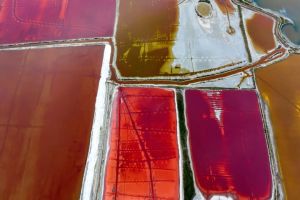
Salt Lake Pink: The Earth's Eyeshadow Palette, Hidden in Shanxi's Rose-Colored Autumn
-

Taihang Red: Driving Through China's Most Dramatic Autumn
-

Yunqiu White: A Winter Fairytale Hidden Inside Autumn