山西

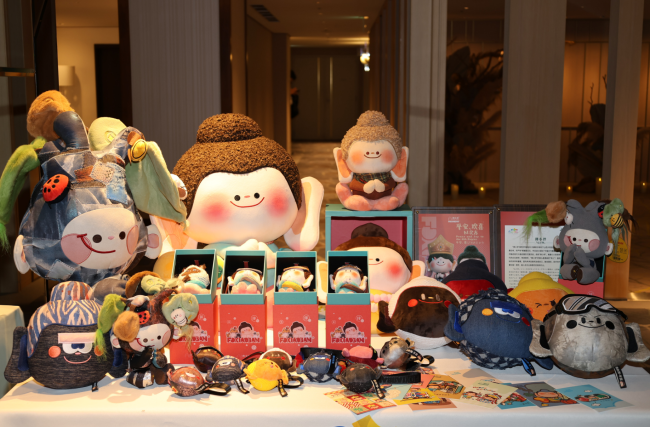
The on-site promotion conference showcased Shanxi’s charm through multiple formats. Jin Xiao, inheritor of the provincial-level intangible cultural heritage Zezhou Ironware craftsmanship, told the story of “a millennium in an iron pot”, highlighting the commonalities between Zezhou ironware and Japanese casting culture. Wang Xing, representative of Datong Naoteng Culture Media Co., Ltd., shared how young teams are using creative design to make Shanxi’s intangible cultural heritage like shadow puppetry and paper-cutting “trendy”, attracting the attention of young Japanese. Qu Zhaohui, Director of the Social Development Department of the Shanxi Development and Reform Commission, detailed the Taosi National Archaeological Site Park, leading the audience to trace the origins of Chinese civilization and sparking deep reflection on cultural heritage.
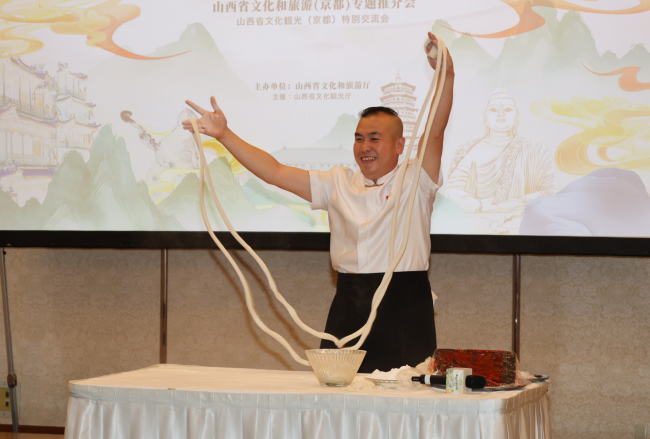
Furthermore, a joint instrumental performance of “The Sea in Spring” by Chinese and Japanese artists interpreted the blending and symbiosis of the two countries’ cultures with melodious tunes. The noodle art performance by Shanxi noodle master Wang Zhanglong, transforming dough into “Dragon’s Whisker Noodles” as fine as hair, allowed guests to experience the “art on the tip of the tongue” up close and immerse themselves in the charm of Shanxi folk culture.
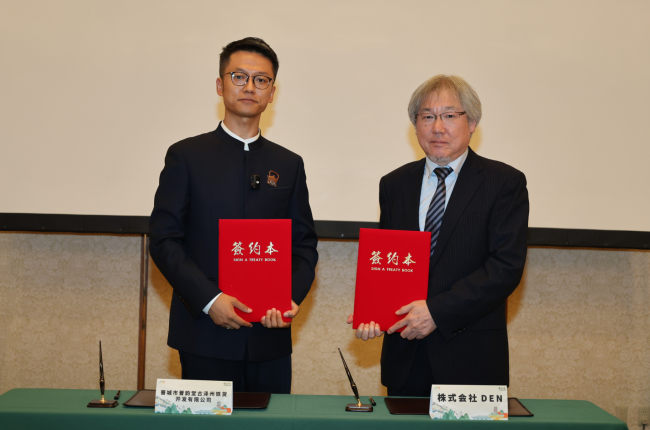
During the event, Shanxi Jinyuntang Culture Technology Co., Ltd. and Japan’s DEN Co., Ltd. formally signed a cooperation agreement. The two parties will collaborate on the overseas promotion of Zezhou ironware and the development of cultural and tourism derivative products. This signing is not only another achievement in Shanxi’s intangible cultural heritage “going global”, but also marks a step from “exchange” to “practical cooperation” in Shanxi-Japan cultural and tourism collaboration, laying the foundation for the implementation of more follow-up projects.

 京公网安备 11011202003835号
增值电信业务经营许可证
互联网宗教信息服务许可证
京公网安备 11011202003835号
增值电信业务经营许可证
互联网宗教信息服务许可证